
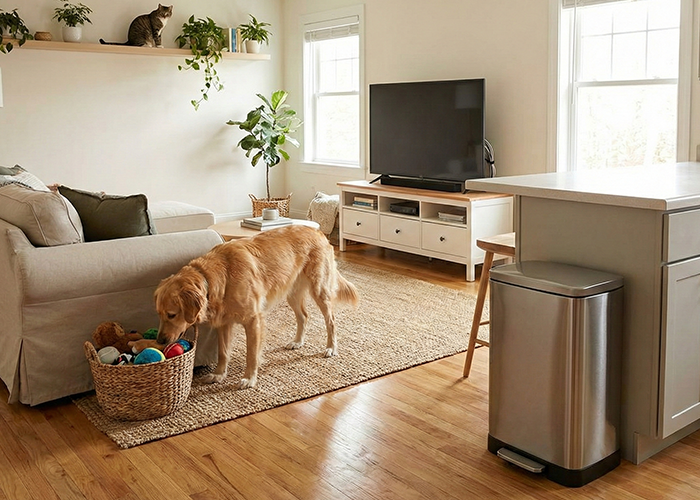
A home with pets should feel relaxed, not risky. With a few smart tweaks, pet-proofing your home can protect your space without making it look like a daycare. The best part is that most changes take minutes, not money.
Pet-Proofing Your Home: Start With a Quick Audit
Pet-proofing your home works best when it starts with a simple scan of what sits at paw level. Most accidents happen in the same places: corners, open bins, low shelves, and spots where small items collect.
A quick walk-through helps you spot patterns before your pet does. In that first pass, aim to remove temptations, not “train through” hazards. For the first week, treat your home like a new environment that needs guardrails.
A short checklist can help you move faster:
- Loose cords, chargers, and power strips that hang or trail
- Open trash cans or recycling bins without a lid
- Coins, hair ties, kids’ toys, and other small swallowable items
- Cleaning products stored under sinks without a latch
- Plants placed on low tables or reachable shelves
- Window screens that wobble or slide
Your Pet’s Habits Set the Rules
Every pet has a different style of mischief. Some chew. Others climb. A few are collectors who steal socks like it’s their job.
That is why the best time to pet-proof your house is right after you notice a new habit. Once you know what your pet targets, the solution usually becomes obvious. A dog who raids the bin needs a lid that locks, while a cat who leaps counters needs fewer launch points.
A home plan that matches your pet’s personality also feels less strict. Instead of blocking every room, the focus stays on the areas where trouble actually starts.
Low Surfaces Become the Danger Zone

Most pets explore with their mouths, especially when they’re young, bored, or teething. Floors and low shelves turn into a buffet when everyday items get left behind.
A tidy baseline matters more than a deep clean. Clear pathways and open corners reduce the odds of a swallowed button, a chewed battery, or a broken glass mess you do not catch in time.
Storage baskets can help, but the placement matters. An open basket on the floor may look neat while still holding “chewable” items. A lidded bin on a shelf keeps things out of sight and out of reach.
Cords and Outlets Need a Safety Upgrade
Electrical cords are oddly tempting. A dangling phone charger looks like a toy, and a lamp cord seems fun to tug. The risk is real, from burns to shocks to a panicked sprint through the room.
A safer setup starts with how cords are routed. Cords that hug the wall or sit behind furniture get less attention. Floor-level power strips also deserve a second look, especially in rooms where pets play.
Cord covers help, but habits help more. Charging stations on counters, wall-mounted hooks for cables, and tucked-away power strips can lower temptation without changing your décor.
Cabinets, Counters, and Hidden Toxins

Many of the biggest dangers are not dramatic. A dropped pill, a cleaning pod, or a sweetener-based gum can cause an emergency fast.
Kitchen and bathroom cabinets should be treated like pet zones, even if your pet “never goes in there.” Doors get left open, items fall, and curious noses find the smallest gap. Simple childproof latches often do the job without looking bulky.
Food safety matters, too. Xylitol, which shows up in some sugar-free gum and other products, is especially dangerous for dogs. Keeping purses, gum containers, and countertop snacks out of reach is a quiet change that can prevent a very loud problem.
Living Room Comfort Without the Chaos
A living room is where pets relax, wrestle, nap, and sometimes launch themselves off the sofa like a trampoline. That mix calls for surfaces that are easy to maintain and layouts that do not invite accidents.
For pet-proof furniture, fabric choice does a lot of the work. Tighter weaves and washable covers can hold up better than delicate materials. Throws also help, but they work best when they fit snugly instead of sliding around.
Tabletops deserve attention as well. Heavy décor that cannot be tipped, coasters that are not chewable, and a “no fragile items on low tables” rule can save you from constant cleanups.
Kitchen Routines That Reduce Risk

A kitchen can be hard to secure because it changes constantly. Cooking, unloading groceries, and packing lunches all create small windows where pets can grab something they should not have.
The most helpful habit is resetting the space after each task. Counters cleared, food sealed, and trash secured keeps the room safer between meals. Even a short break during cooking can be enough time for a quick snack theft.
Floor checks matter, too. Onion skins, plastic wrap, and dropped bones can land quietly and stay there. A quick sweep after cooking keeps pets from turning scraps into a scavenger hunt.
Bathrooms and Laundry Rooms Hide Small Hazards
Bathrooms are full of strong scents, small items, and products that should never be tasted. Cotton swabs, floss, razors, and hair ties are common troublemakers. Many of them are small enough to swallow and tricky to pass.
Laundry rooms bring a different set of risks. Pods and detergents can be appealing because of their smell and shape. Dryer sheets can also get dragged around like toys if they land on the floor.
Closed doors help, but they are not perfect. Lidded hampers, a higher shelf for supplies, and a quick floor scan after getting ready can cut down on surprises.
Windows, Balconies, and Doorways
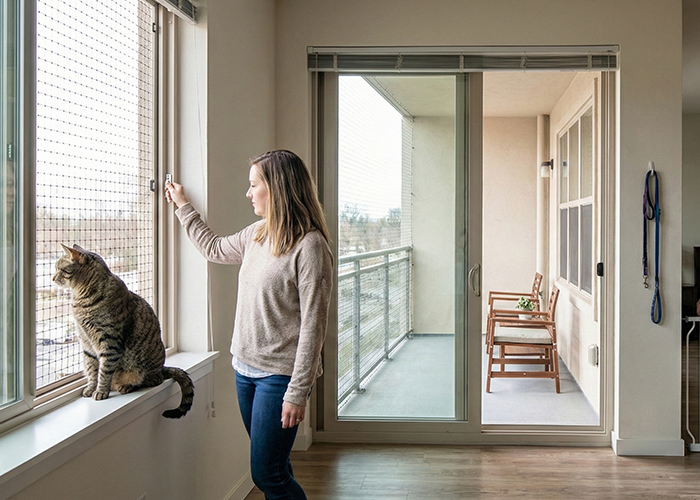
A home can be spotless and still unsafe if exits are not secure. Loose screens and cracked doors create opportunities for falls or escape, especially for cats that love perches. Anyone trying to cat proof your home should start by checking screens, tracks, and balcony gaps before buying new gadgets.
Window safety can be simple. Tight screens, limits on how far windows open, and furniture moved away from launch zones all reduce risk. Balcony spaces may need extra care, since a small gap can look like a passage to an adventurous pet.
Entry doors matter just as much. A pet that darts can slip out during deliveries or quick chats with neighbors. A baby gate, a closed-off entry area, or a “leash before the door opens” habit can prevent that heart-dropping moment.
Bedrooms and Kids’ Spaces Need Clear Zones
Bedrooms often feel safe because they are quieter. The problem is that bedrooms also collect items that pets love to chew or steal, like socks, earbuds, lip balm, and medication bottles.
Nightstands should be treated like countertops. Anything scented, sweet, or small is better off in a drawer with a latch. A charging cable left hanging over the edge can turn into a chew target overnight.
Kids’ rooms can be even trickier. Toys, art supplies, and tiny parts get left out, then forgotten. A few covered bins and a routine “toy sweep” at the end of the day can make the space safer without making it feel strict.
Garages, Yards, and Utility Areas
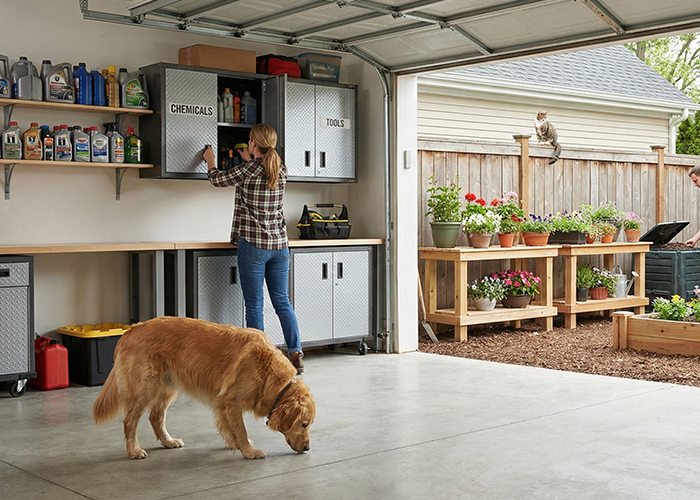
Some of the most serious risks live outside your main living areas. Garages store chemicals, tools, and automotive fluids. Yards can include mushrooms, mulch, pest products, and plants that do not mix well with pets.
Antifreeze deserves special attention because even small amounts can be extremely dangerous. Any spills should be cleaned right away, and bottles should be stored high and sealed. If your pet spends time in the garage, a closed cabinet is better than a low shelf.
Plants can be a hidden issue indoors and out. Some common houseplants and flowers can cause serious illness if chewed. If you love fresh arrangements, placement matters. Higher shelves and pet-safe plant choices can help you keep greenery without worrying every time your pet wanders by.
Safety Gets Easier With Daily Structure
The goal is not to control your pet’s every move. A better goal is to build a home that supports good choices, then reinforce them with a routine that feels normal.
Boredom tends to create problems. More play, more sniff time, and more structured rest can reduce the urge to chew, dig, and raid. For many families, dog proof your home becomes much easier once the dog’s day has enough activity to take the edge off.
A small routine can hold it all together:
- A two-minute floor scan before bed
- Trash checked and closed after meals
- Cords and chargers returned to one charging spot
- One “safe chew” or enrichment option available each day
The Long Game: Keeping It Pet-Safe Over Time
Pet-proofing your home is not a one-time project. Pets grow, habits change, and a calm kitten can turn into a high-jumping adult. A dog who never opened cabinets can learn the trick after one good smell.
A monthly check-in keeps you ahead of the next new habit. The best time to adjust is before something goes wrong, not after. Small updates also feel easier than a big overhaul.
New items deserve a quick rethink, too. Houseplants, holiday décor, guest bags, and deliveries can introduce fresh hazards. A short “what could my pet reach?” moment before you set something down can save you a stressful call later.
Safety That Feels Like Home
A pet-safe space should still feel like your space. With a few steady habits, pet-proofing your home becomes part of normal life, and your pet gets the freedom to be curious without constant risk. That is the kind of comfort every home deserves.
Related Articles: