
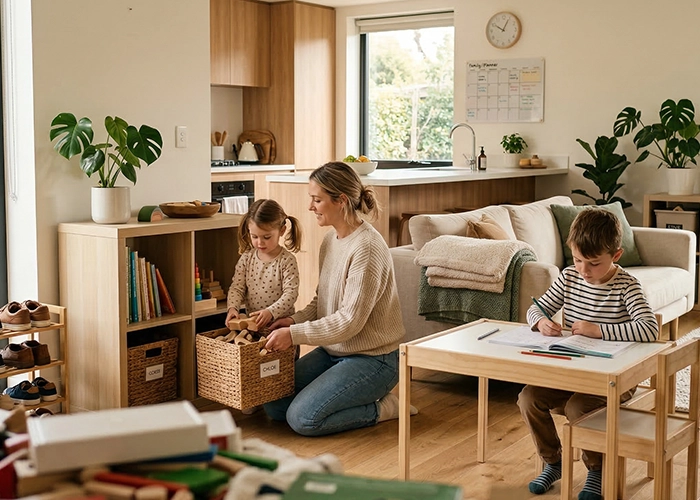
A calm home environment can feel hard to achieve when work schedules, school activities, and household responsibilities compete for attention. Yet creating a stress-free family home is possible with thoughtful routines, smart organization, and small daily habits that reduce chaos.
Busy parents often find that the right systems help the household run more smoothly. When a home feels predictable and organized, families can spend less time managing clutter and more time enjoying each other.
Creating a Stress-Free Family Home Starts With Clear Daily Routines
A predictable routine is one of the most effective ways to create a stress-free family home. When family members know what to expect during the day, fewer decisions are required and the household flows more naturally.
Morning routines often shape the tone for the rest of the day. Instead of rushing through last-minute tasks, many families benefit from preparing the night before. Simple habits such as laying out clothes, packing lunches, and organizing backpacks can make mornings calmer.
Evening routines play an equally important role. A short family reset at the end of the day helps prevent clutter from building up. Spending just 10 or 15 minutes putting items back in their place can make the home feel organized again before everyone goes to bed.
Parents can also introduce routines gradually. Trying to change everything at once may feel overwhelming, but small adjustments often create lasting results.
Declutter the Spaces Your Family Uses the Most
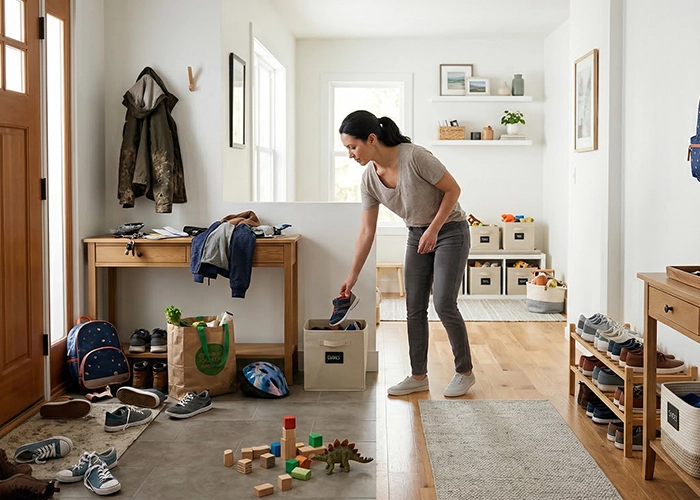
Clutter is one of the biggest sources of stress inside a home. When surfaces fill with items that do not belong there, even simple tasks can feel frustrating.
Families often see the biggest improvement when they focus on high-traffic areas first. These spaces typically include:
- Entryways or mudrooms
- Kitchen counters
- Living room surfaces
- Children’s play areas
Reducing clutter in these spaces makes daily life easier. A clear entryway helps everyone find shoes, backpacks, and keys quickly. A tidy kitchen counter creates a calmer environment during meal preparation.
Decluttering does not require a full house overhaul. Parents can begin with a single drawer, shelf, or small corner of a room. Once the first space becomes organized, motivation to continue often follows naturally.
Another helpful approach is the “one in, one out” rule. When a new item enters the home, an old item leaves. This simple guideline keeps possessions from accumulating faster than they can be managed.
Design Spaces That Support Everyday Family Life
A stress-free home is not only about cleaning and organizing. The physical layout of the home also plays a major role in how comfortable the space feels.
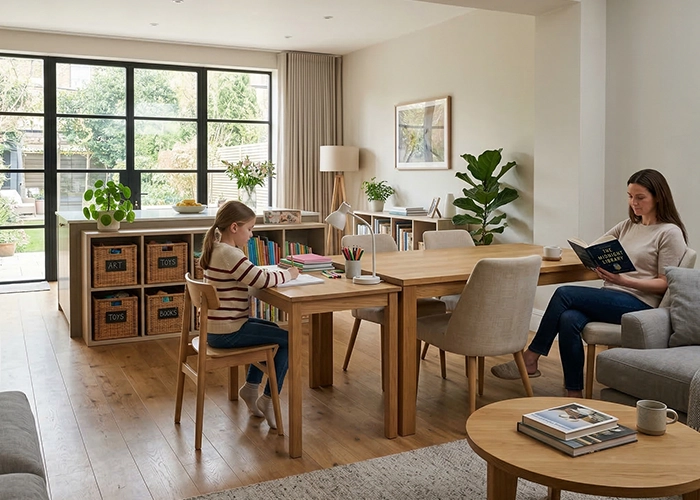
Families benefit when rooms are designed around real daily activities. For example, children often complete homework in shared living spaces rather than in bedrooms. Creating a small homework station in the dining or living area can reduce distractions and encourage productivity.
Storage solutions also contribute to smoother routines. Items that children use regularly should remain easy to reach. Low shelves, labeled baskets, and simple storage bins allow kids to take responsibility for their belongings.
Lighting and furniture placement can affect stress levels as well. Bright natural light and open walking paths make a room feel welcoming. When spaces feel comfortable and functional, family members naturally spend more positive time together.
Simplify Household Tasks With Family Participation
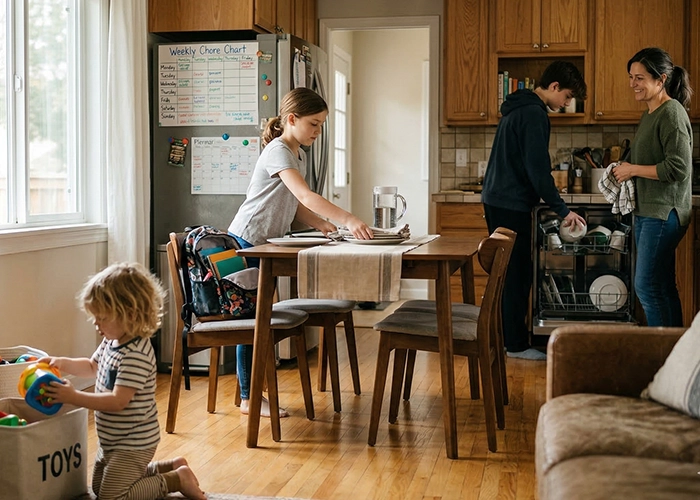
Parents often carry the majority of household responsibilities, which can lead to exhaustion over time. Involving children in everyday tasks helps distribute the workload and teaches valuable life skills.
Children of different ages can contribute in meaningful ways:
- Young children can put toys away, match socks, and help wipe surfaces.
- School-age children can set the table, load dishwashers, and organize backpacks.
- Teenagers can assist with laundry, meal preparation, and basic cleaning.
When chores become part of the daily routine, they feel less like punishment and more like shared responsibility. Families that work together often develop stronger cooperation and communication.
Parents may also find that offering simple structure helps children stay motivated. A weekly chore chart or rotating task schedule provides clear expectations while keeping responsibilities balanced.
Create Calm Zones for Relaxation and Family Time
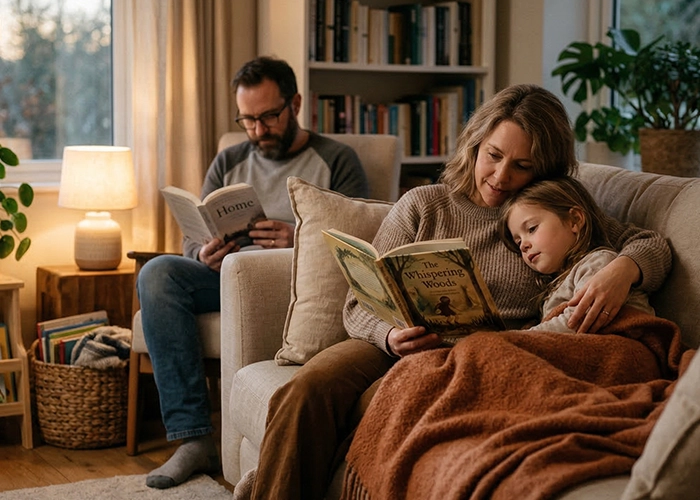
Every household benefits from having spaces dedicated to rest and connection. A calm environment encourages families to slow down and recharge after busy days.
These calm zones do not require large rooms or elaborate designs. Even a small reading corner or cozy couch area can become a place where family members unwind.
Consider incorporating elements that promote relaxation:
- Comfortable seating
- Soft lighting
- Books or quiet activities
- Plants or natural decor
Limiting digital distractions in these spaces may also improve the atmosphere. When phones and screens are set aside for a while, conversations and shared moments often happen more naturally.
Parents sometimes notice that creating intentional family spaces strengthens relationships. These areas become places where children feel safe talking about their day or sharing experiences.
Use Simple Systems to Manage Family Schedules
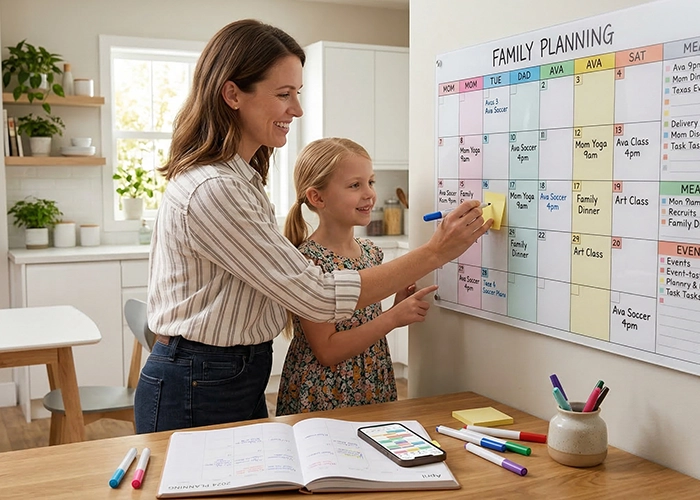
One of the most common sources of household stress comes from competing schedules. School events, work obligations, sports practices, and appointments can easily overlap.
Organizing these commitments helps families stay ahead of potential conflicts. Many households benefit from keeping a shared family calendar in a visible location.
Effective scheduling systems may include:
- A wall calendar for family activities
- Color-coded schedules for each family member
- Weekly planning meetings
- Digital reminders for important events
Holding a short planning session each week allows everyone to review upcoming activities. Parents can coordinate transportation, meal planning, and homework schedules more easily when the week is mapped out.
Over time, these systems create a sense of structure that reduces last-minute stress.
Focus on Small Habits That Keep the Home Running Smoothly
Large changes can feel intimidating, but small daily habits often produce the greatest impact. Consistency helps homes stay organized without requiring hours of cleaning each day.
Many families find success with a few simple habits:
- Doing a quick evening tidy-up
- Returning items to their proper place after use
- Preparing meals or lunches in advance
- Completing laundry in smaller loads throughout the week
These routines prevent tasks from piling up. Instead of dealing with overwhelming messes, families maintain steady progress with manageable effort.
Parents should also remember that perfection is not necessary. A home that feels welcoming and functional matters more than one that appears flawless.
A Calm Home Helps Families Thrive
Creating a stress-free family home does not require complicated systems or major renovations. With clear routines, thoughtful organization, and shared responsibility, busy parents can build an environment that supports both productivity and relaxation.
A peaceful home begins with small changes that make everyday life easier. Start with one simple improvement today and build routines that support your family’s needs.
Related Articles