
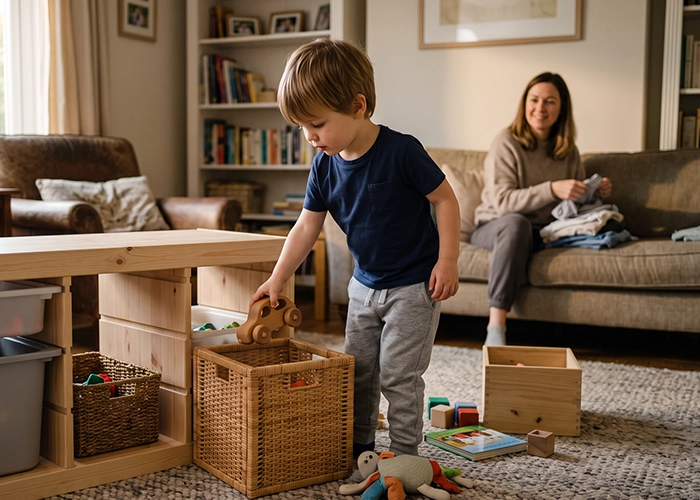
Keeping a family home organized can feel like a daily puzzle, especially when toys, school papers, shoes, and art supplies seem to appear everywhere.
Hacks That Children Can Follow
With the right kid-friendly home organization hacks, you can create a home that feels calmer while helping your children take better care of their belongings.
A good organization system should make sense to the people using it. For children, that means storage must be easy to see, reach, open, and understand. A beautiful row of matching boxes may look neat, but it will not help much if a child cannot tell what belongs inside.
Start by looking at each space from your child’s point of view. A hook placed at adult height will not hold a young child’s backpack, and a heavy drawer may stay empty because it is too hard to open. Simple changes can turn cleanup from a parent’s chore into a shared family habit.
The best systems usually have three basic qualities:
- Children can reach the storage area without help.
- Every item has a clear and easy-to-remember home.
- Putting something away takes only one or two steps.
When storage is simple, children are more likely to use it. The goal is not a perfect room at every moment. It is a home that can be reset without a long struggle.
Begin With Less Stuff
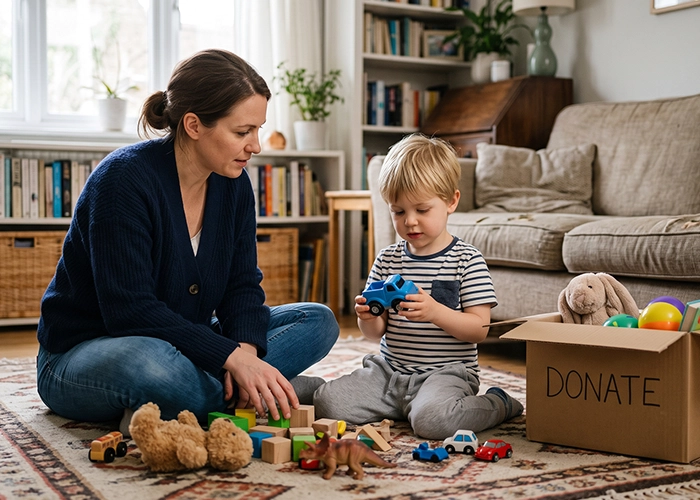
Before buying baskets or building shelves, take a close look at what your family already owns. Too many belongings can overwhelm children, even when plenty of storage is available.
Sort toys, clothes, books, and craft supplies into four groups:
- Keep and use often
- Store for later
- Donate or pass along
- Throw away or recycle
Invite children to help with choices that fit their age. A preschooler might choose three stuffed animals to donate, while an older child can sort an entire drawer. Giving children some control makes the process feel less like their things are being taken away.
Avoid asking whether your child wants to keep every single item. That question often leads to a quick “yes.” Instead, ask which toys they enjoy most or which clothes still feel comfortable. These questions make it easier to identify what truly matters.
Create a Drop Zone Near the Door
The entryway often becomes the first cluttered area of a family home. Backpacks land on chairs, shoes block the walkway, and jackets get dropped on the floor.
A child-friendly drop zone gives each item a place as soon as your family comes home. It does not need to take up much room. A few low hooks, a shoe basket, and a small tray for daily items may be enough.
Consider giving each child a personal area that includes:
- One hook for a backpack
- One hook for a jacket
- A basket or shelf for shoes
- A small bin for sports or activity gear
- A folder for papers that need a parent’s attention
In a smaller home, use the back of a door or a narrow wall beside the entrance. Vertical storage keeps the floor clear while making good use of limited space.
If you live in an HOA community, check your association’s rules before placing cabinets, benches, or hooks outside your front door. Indoor drop zones usually provide the same convenience without affecting shared hallways or exterior appearance.
Rotate Toys Instead of Displaying Everything
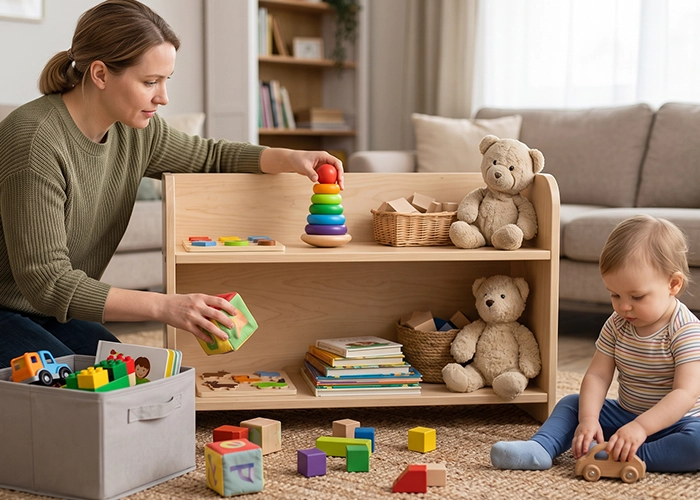
When every toy is available at once, children may pull out several activities without settling into any of them. A toy rotation reduces visual clutter and can make old toys feel interesting again.
Keep a small group of toys in the play area and store the rest in labeled containers. Every few weeks, switch several items. There is no need to follow a strict schedule. Rotate toys when children seem bored or when the room becomes difficult to manage.
A balanced rotation might include:
- A building toy
- A pretend-play set
- A puzzle or game
- A few favorite books
- Art or sensory materials
- Several comfort toys
Do not rotate a deeply loved item without asking. A favorite stuffed animal or bedtime book should remain available. The purpose is to simplify play, not remove the things that help a child feel secure.
Make Clothing Storage Easier
Closets designed for adults can be difficult for children to use. High rods, deep drawers, and tightly packed shelves often lead to clothes being placed on the nearest chair.
Move everyday clothing into easy-to-reach areas. Reserve higher shelves for seasonal items, extra bedding, or clothes that do not fit yet. Drawer dividers can keep small items from becoming mixed together.
Picture labels work well for young children. Add a simple image of socks, pajamas, shirts, or pants to each drawer. Older children may prefer written labels or divided sections.
You can also make mornings easier by creating a weekly clothing station. Use five labeled sections for school-day outfits. Children can help select their clothes at the start of the week, which may reduce rushed decisions before school.
Build a Homework Station That Fits Your Routine
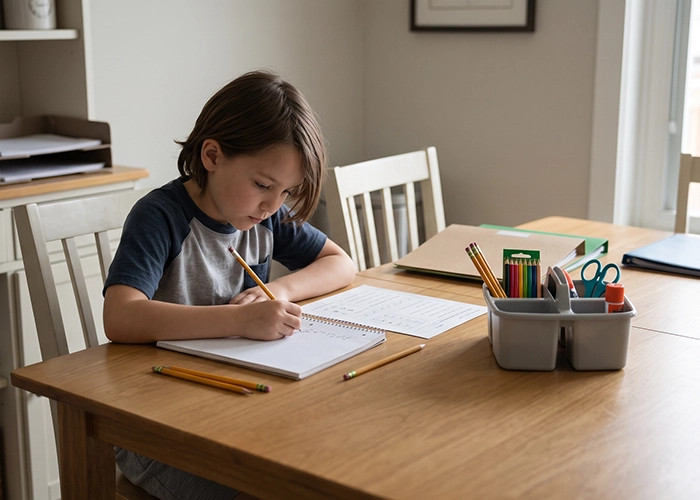
A homework station does not need to be a separate room. A corner of the kitchen table, a small desk, or a rolling cart can work well if supplies are kept nearby.
Store the items your child uses most, such as pencils, paper, crayons, scissors, and glue. Keep the selection limited so the work area does not become another clutter zone.
Use cups or divided containers for small supplies. Place extra materials in a nearby cabinet rather than crowding the desktop. At the end of each study session, children can return supplies and clear the surface.
Paper needs its own system. Three folders can handle most school documents:
- Take Action: Forms to sign, payments to send, and upcoming notices
- Keep: School records, schedules, and important information
- Celebrate: Artwork, certificates, and projects worth saving
Review these folders each week. This keeps school papers from spreading across counters, bags, and bedroom floors.
Control the Flow of Artwork
Children’s artwork can build up quickly, and every picture may feel too special to discard. A display-and-save system lets you enjoy current creations without keeping every sheet on the refrigerator forever.
Choose one display area, such as a wire with clips, a magnetic board, or several frames that open from the front. When new artwork goes up, older pieces can be reviewed.
Ask your child to choose a few favorites to save. Store these in a portfolio, large envelope, or labeled file box. You can also photograph bulky projects before letting them go.
At the end of the school year, select a small group of meaningful pieces. Add the child’s name, age, and date before storing them. A thoughtful collection often feels more special than several overflowing boxes.
Set up Snack and Drink Stations
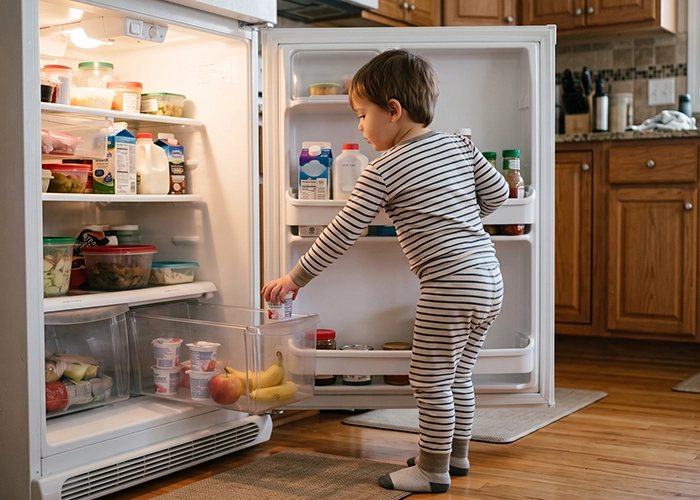
Children enjoy independence, and the kitchen offers many chances to practice it. A low snack station allows them to choose from parent-approved options without searching through every cabinet.
Use a basket or clear bin for shelf-stable snacks. In the refrigerator, place washed fruit, cheese, yogurt, or prepared vegetables on a low shelf. Keep cups and reusable water bottles in a drawer children can reach.
The selection does not need to be large. A few clear choices make the station easier to restock and clean. Establish simple rules about when snacks are available and how much children may take.
Safety still comes first. Cleaning products, sharp tools, medicine, alcohol, and breakable items should remain locked or stored well beyond a child’s reach.
Make Bathroom Routines More Manageable
Shared bathrooms can become messy within minutes. Towels, toothbrushes, bath toys, and personal care products all need clear homes.
Assign each child a hook or towel bar. Color coding can help family members identify their belongings without reading labels. The same colors may be used for toothbrush cups, washcloths, or storage baskets.
Place daily items in a small caddy that can be returned to a cabinet after use. A mesh bag or draining basket keeps bath toys together and allows them to dry between baths.
Keep counters as clear as possible. When fewer things are left out, children have more room to complete their routines and spills are easier to clean.
Turn Cleanup Into a Short Daily Habit
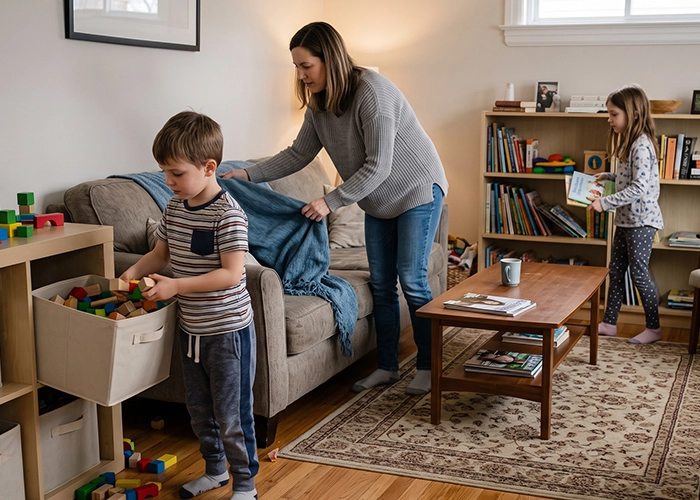
Waiting until the house is very messy can make cleanup feel tiring for everyone. A short daily reset is easier to manage and prevents clutter from spreading.
Choose a time that fits your family’s routine. You might clean up before dinner, before screen time, or before the bedtime routine begins. Set a timer for five or ten minutes and have everyone work together.
Give children specific tasks rather than saying, “Clean your room.” Clear directions are easier to follow:
- Put the blocks in their bin.
- Return books to the shelf.
- Place dirty clothes in the hamper.
- Carry cups to the kitchen.
- Put shoes by the door.
Keep the mood calm. Music can make the task more enjoyable, but cleanup should remain a normal part of family life rather than a punishment.
Adjust the System as Children Grow
An organization system that works for a four-year-old may not suit a ten-year-old. Children’s belongings, height, routines, and interests change over time.
Review each space every few months. Notice which bins stay tidy and which areas collect clutter. A messy spot often means the system is too complicated, too full, or placed in the wrong location.
Ask children what would make the space easier to use. They may want a hook moved, a drawer relabeled, or a new place for sports gear. Their feedback can reveal small problems adults overlook.
Older children can take more responsibility for their rooms and schedules. Give them freedom to arrange personal spaces, but agree on basic expectations for cleanliness, safety, and shared areas.
Keep Safety Part of the Plan
Organization should make a home safer, not simply more attractive. Avoid placing heavy containers on high shelves where they could fall. Check storage furniture for sharp corners, loose parts, and signs of instability.
Secure dressers, bookcases, and other climbable furniture to the wall using suitable restraints and proper hardware. Keep tempting items, such as toys and remote controls, off the tops of dressers. This reduces the chance that a child will climb to reach them.
Toy chests should have safe lids that cannot fall onto small hands or trap a child inside. Open bins, low baskets, and lightweight containers are often easier and safer for everyday use.
Regularly check toys for broken pieces and follow age guidance for small parts. A tidy home still needs active safety checks, especially when children of different ages share the same space.
Less Clutter, More Room for Family Life
Kid-friendly organization is not about keeping every room spotless.
It is about building simple systems that children can understand, giving them a useful role in caring for the home, and making daily routines easier for everyone.
Ready to trade daily clutter for a home that feels calmer and works better for everyone?
Begin with one high-traffic space, let your children take part, and discover more practical ways to simplify family life at HomeLiving.blog.
Read Articles: